When the rain hits the ground in Neil Hannam’s Aubrey, it does more than set the mood. It is something devastating that signals death. Somewhere out there, in the shadows of a storm-drenched forest or the mud-slicked coastline, Aubrey is watching. Waiting. Moving like a phantom, he leaves behind mangled bodies, confusion, and fear that no man alone should be capable of inspiring because Aubrey isn’t just a man.
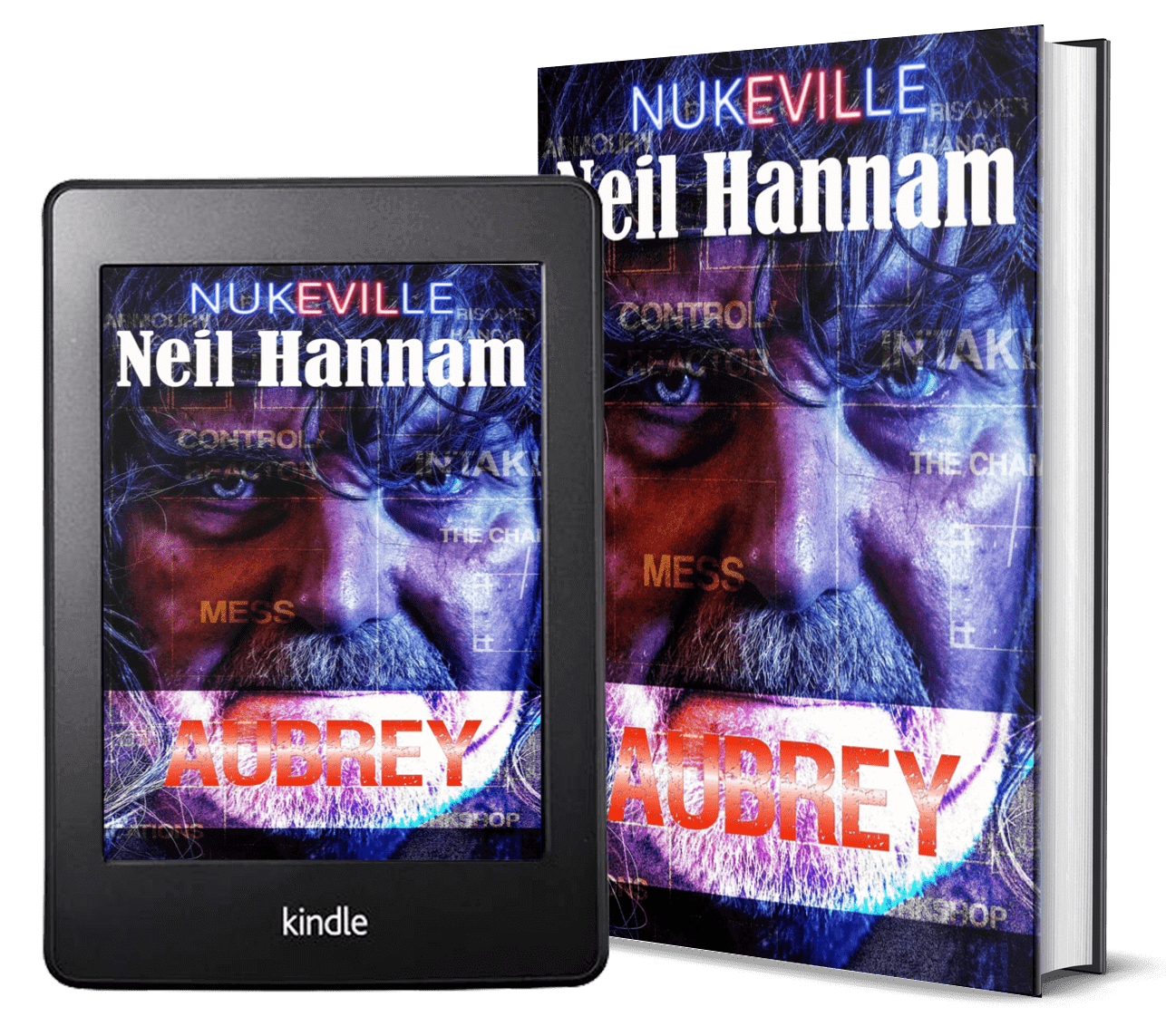
From the moment of his escape, something about him defies logic. He is in his sixties, his body weathered and aged. His skin bears the ravages of time, his joints should ache, and his breath should catch. But beneath the leathery flesh lies something impossible. The unrelenting strength, control, and speed. He scales trees like a panther, slaughters trained officers with surgical precision, and evades state-of-the-art surveillance without breaking a sweat. There’s no wheezing, no shaking hands, no signs of weakness. Aubrey is built to kill.
And yet, he doesn’t lash out in chaos. Instead, he operates with purpose. Every move is deliberate, calculated. He doesn’t panic when surrounded. He watches, assesses, and then vanishes. He does not make mistakes. Whether it’s in the heart of the woods or along a narrow beach trail, he turns his surroundings into weapons. This isn’t instinct; it’s programming.
Hannam drops subtle hints that Aubrey is the result of something engineered. A secret project. A failed experiment. Perhaps even something worse. He isn’t infected in the zombie-apocalypse sense (at least not yet), but he may be the first wave of something far more terrifying. His body might be aging, but his abilities aren’t. He’s like a prototype—weaponized, untraceable, and utterly lethal.
The chilling power of Aubrey’s character isn’t just in what he does—it’s in what he doesn’t. He doesn’t speak much. He doesn’t explain. He doesn’t hesitate. In a world where characters often over-express themselves, Aubrey is nearly silent. His presence alone brings dread. When he kills, he does it swiftly. And when he leaves, he vanishes like a ghost.
So why Nukeville? That name alone carries the weight of something dangerous, secretive, and locked away. It’s not just a location. It is a final destination. It is a place where things go to be buried or to rise. Aubrey is drawn to it like a homing beacon, and his journey suggests that something in Nukeville either created him or is calling him back.
What is it? Could this mean the end of humanity?
Aubrey’s trip across the southeast of England isn’t random. It’s a slow burn of destruction, building tension, pushing both characters and readers to the brink. And with every step closer to Nukeville, Aubrey seems less human. What started as a fugitive manhunt is slowly revealing itself to be something darker. Perhaps it is the rise of a threat that cannot be reasoned with and nor can it be defeated, even with the strongest armed instrument in this world.
In Aubrey: Nukeville Book 1, Aubrey is not a villain to be caught. He is a storm to be survived. He is the shadow of something the world thought it buried long ago. And by the time he reaches his destination, the question will no longer be, Who is Aubrey? It will be. Can anyone stop him before he brings the end with him?
Only reading the book will lead you to a conclusion. Here is a link to purchase: https://www.amazon.com/dp/B0DVTGH4LY.