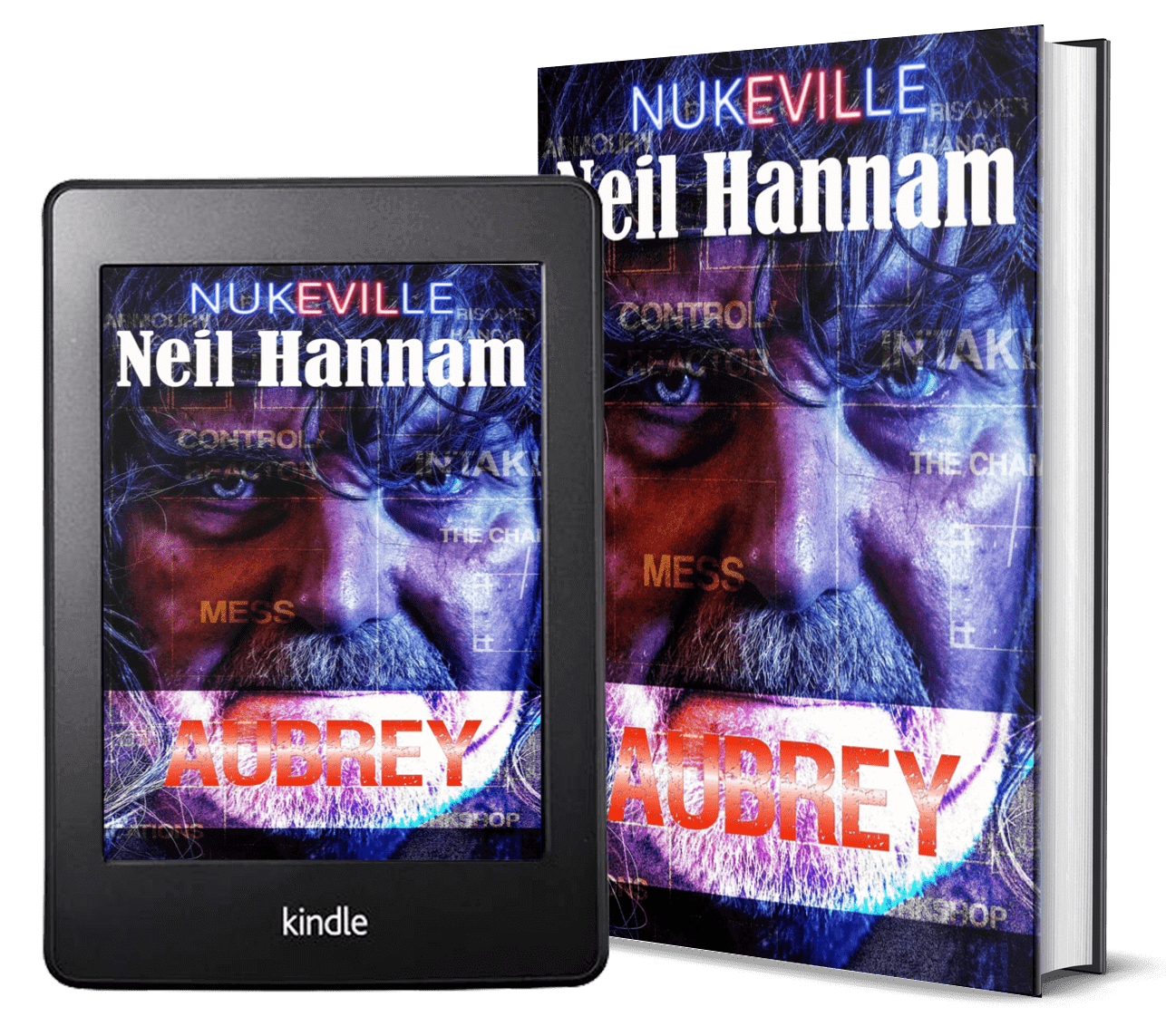
In AUBREY: Nukeville (Book One), Neil Hannam reimagines London not just as a city under duress, but as a living, deteriorating organism on the verge of collapse. The story unfolds with a grim intensity, using real London locations like Green Park and Hammersmith to create a setting that feels disturbingly close to home. The realism of these places grounds the book’s dystopian elements, making its fictional threats feel alarmingly plausible.
Green Park, often associated with leisure and escape, is rendered hauntingly lifeless in the novel. Dr. Bill Bonny, one of the central characters, lives near the park in a converted wartime flat—already hinting at London’s history of survival and trauma. The building, damaged during the Blitz, carries scars that mirror the nation’s broader emotional and physical fragility. Hannam uses this setting to establish a through-line between historical resilience and modern decay. Bill’s cramped studio, once a hopeful beginning, is now a metaphor for suffocation and disillusionment. The Blitz may have ended long ago, but in Nukeville, its legacy of fear and confinement still echoes in daily life.
Hammersmith, too, becomes a vital part of this dystopian tableau. After escaping from Wormwood Scrubs, a grim relic of the prison system located in West London, the fugitive Aubrey flees under cover of darkness. But rather than retreat underground, Hannam stages Aubrey’s escape on the River Thames. Clinging to a boat as it drifts through the waterway, Aubrey’s journey becomes a powerful image of desperation and survival. The Thames, historically the lifeblood of the city, is transformed into a silent accomplice to flight and concealment. The river’s murky expanse offers both escape and uncertainty, its currents pulling Aubrey past a fractured London that still carries the shape of the familiar but none of its former comfort. Above him, the city’s surface continues as usual—almost indifferent—while below, in the water and shadows, chaos quietly unfolds.
What makes Hannam’s vision of London so unsettling is not just the descriptions of decay but the familiarity of the environment. The tube station, the overcast skies, the rush-hour tension—these aren’t imagined dystopias. They’re fragments of real life, magnified under the pressure of a spreading pandemic and a violent fugitive at large. Readers who know London will feel a chill of recognition; readers who don’t will believe they’ve lived there.
In this sense, AUBREY: Nukeville is not just a dystopian thriller. It’s a warning. Hannam cleverly uses London as a character in itself—tired, wounded, but still standing. The streets are not rubble, but they might as well be. The train stations still function, but with a haunting new rhythm. Hannam understands that dystopia doesn’t arrive with a bang; it creeps in slowly through infrastructure, public indifference, and the quiet erosion of safety.
By anchoring his story in recognizable places, Hannam invites readers to question their own surroundings. Could our own city fall apart like this? Are the signs already present?
In the world of AUBREY: Nukeville, the apocalypse isn’t announced by sirens. It’s whispered through cracked pavements, malfunctioning communications, and buildings that once survived bombs now succumbing to time and negligence. London becomes the perfect stage not because it’s unfamiliar, but because it is intimately known—and now, irrevocably changed.